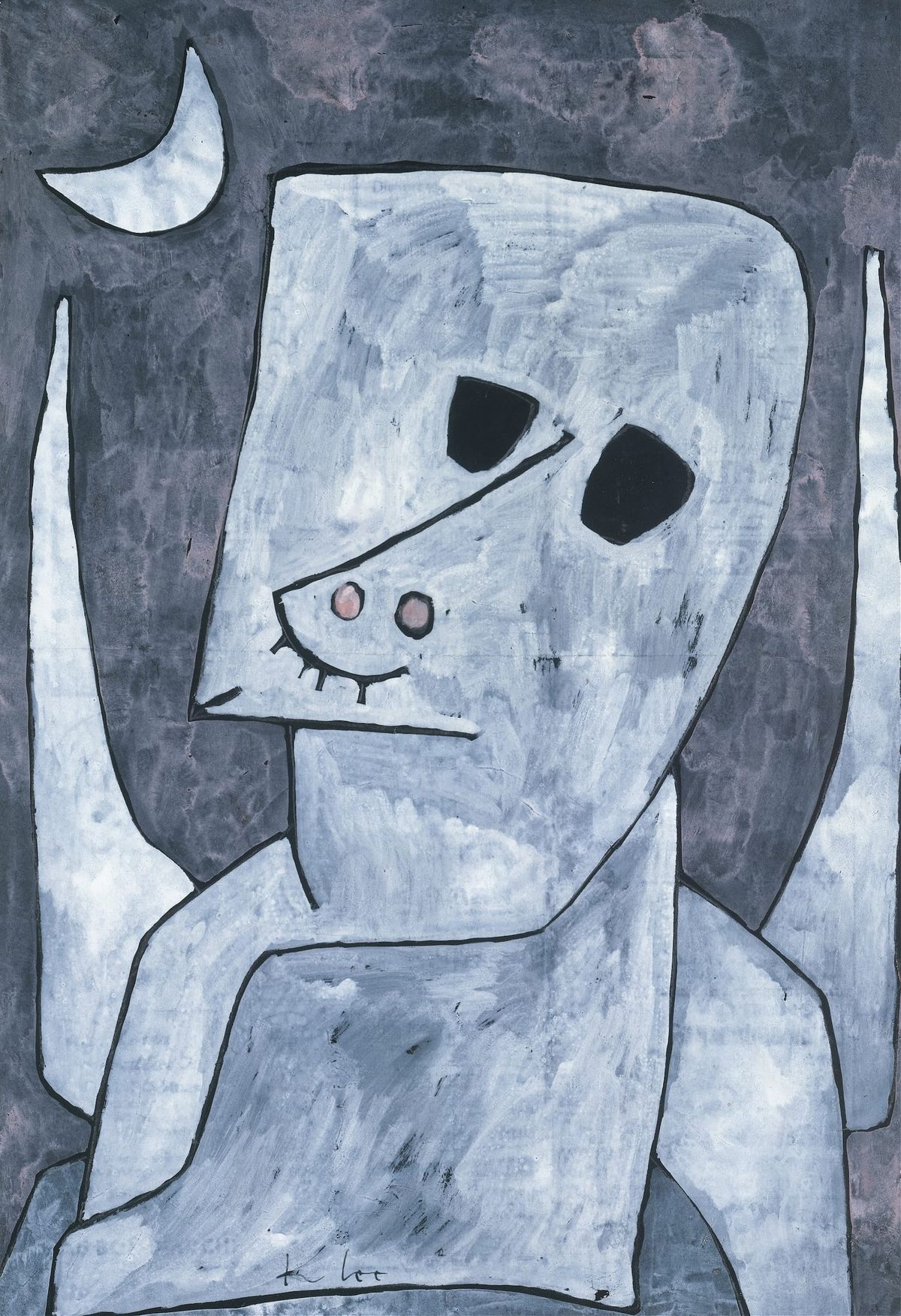
The exhibition Paul Klee: Other Possible Worlds examines the Swiss-German artist’s departure from the Bauhaus and his experiences during the political turmoil of the 1930s, leading up to his death in 1940. This is the first U.S. museum exhibition to focus on Klee’s prolific creative work from his final decade. Displayed at the Jewish Museum, the show features 100 paintings and drawings, including seldom-seen pieces from the 1930s and 1940s, emphasizing Klee’s individualism and imagination as acts of defiance against Nazi oppression.
Klee was born in 1879 in Switzerland to a musical family and initially trained as a violinist before pursuing visual arts in his teens. Engaged with various emerging artistic movements, Klee gained recognition during his decade at the Bauhaus. In 1931, he left his teaching role to concentrate on painting and accepted a position at the Düsseldorf Academy. However, with Hitler’s rise, Klee’s art was labeled subversive by the National Socialists, leading to his dismissal and branding him as “a Galician Jew.” Exiled in his homeland, Klee confronted fascism’s harsh realities and was later afflicted by scleroderma, a then-incurable autoimmune disease, in 1935.
The exhibition delves into Klee’s artistic evolution, showcasing his continual quest for novel methods to critique society, reject conformity, and develop a new artistic language to address political oppression and violence. His mythopoetic approach and nonconformist themes are highlighted throughout his work.
Curated by Mason Klein, Senior Curator Emeritus, and organized by the Jewish Museum in partnership with the Zentrum Paul Klee and the Kunstmuseum Bern, Paul Klee: Other Possible Worlds is on view at the Jewish Museum, located at 5th Ave and 92nd St in New York City, until July 26, 2026. More information can be found at thejewishmuseum.org.