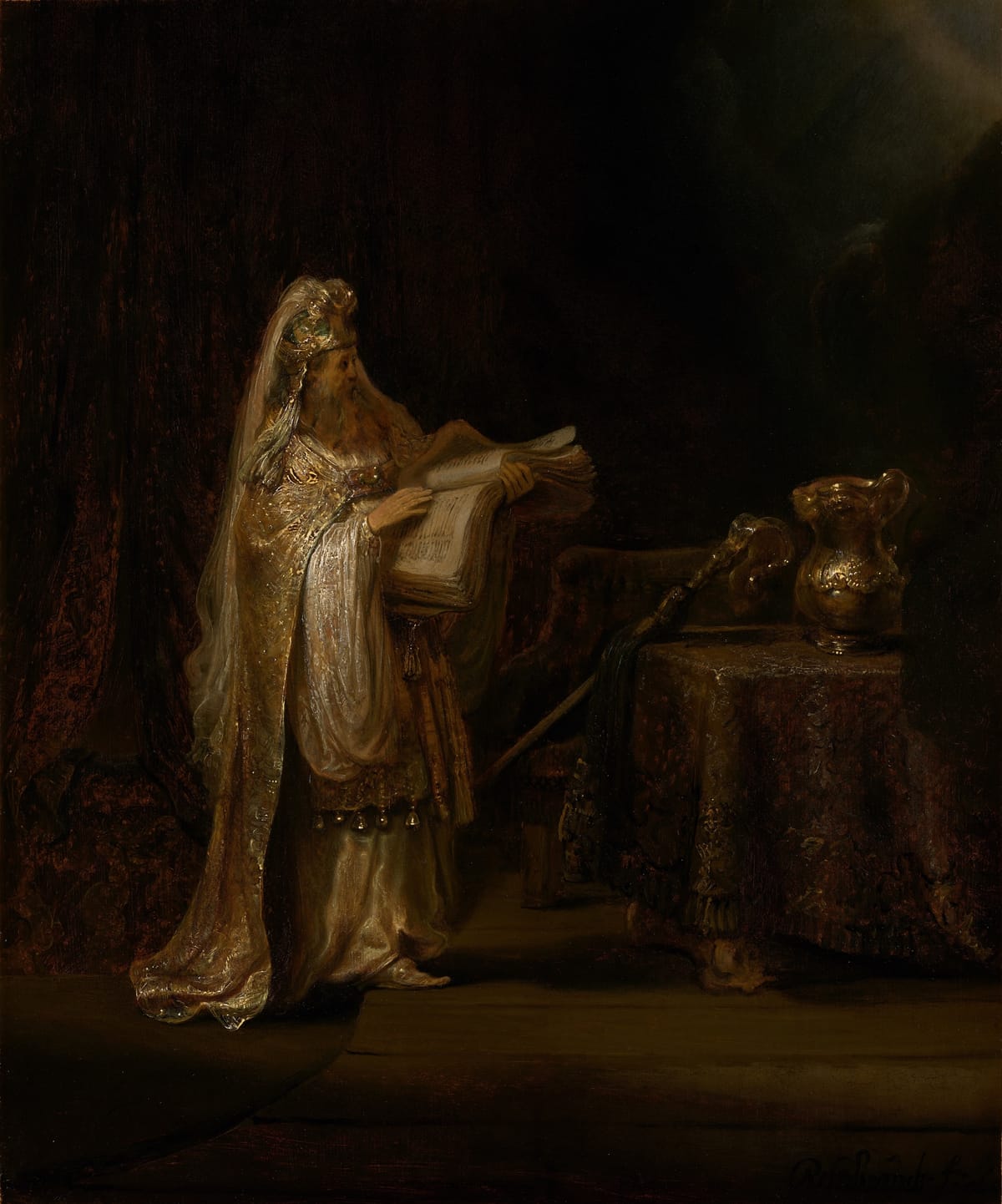
The Rijksmuseum in Amsterdam has added a significant piece to its collection: a painting attributed to Rembrandt van Rijn after a thorough two-year study. “The Vision of Zacharias in the Temple” (1633), which had been in private hands for decades, is now on display thanks to a long-term loan. The artwork, unseen by the public for over 60 years, was initially misattributed to an anonymous student of Rembrandt due to limited analysis based on photographic reproductions rather than direct inspection.
The anonymous owners, who purchased the painting in 1961 from Amsterdam art dealer Piet de Boer, reached out to the Rijksmuseum for restoration and in-depth analysis. The museum’s researchers employed techniques similar to those used in the reconstruction of “Night Watch” (1715) to verify the painting’s authenticity. Boston College professor and art historian Amy Golahny remarked on the piece’s craftsmanship and its illustration of the challenges in authenticating artworks.
Petria Noble, the head of painting conservation at the Rijksmuseum, and Jonathan Bikker, a museum researcher, published their findings in Burlington Magazine’s March issue. Their research dated the wooden panel to between 1625 and 1640, aligning with Rembrandt’s timeline. The painting’s materials and techniques, such as the white chalk ground and light-brown primer, matched those seen in Rembrandt’s other works. Specific pigments found in the painting further supported its attribution to the Dutch Master.
Rijksmuseum Director Taco Dibbits noted the exceptional quality of the painting post-restoration, commenting on the vibrant effect achieved with yellow pigments. The piece captures a biblical scene from the Gospel of Luke, where the archangel Gabriel appears to high priest Zacharias, but intriguingly, Rembrandt chose to depict Gabriel’s presence as a soft yellow light rather than a physical form. This decision invites viewers to imagine the archangel’s appearance, showcasing Rembrandt’s innovative approach to storytelling.
This discovery is part of a recent trend of unveiling long-hidden works by Rembrandt. In 2023, two small portraits by the artist emerged at the Rijksmuseum after nearly 200 years. Looking ahead, the Stedelijk Museum in Zutphen will host an exhibition in 2026 featuring newly attributed Rembrandt etchings from Charlotte Meyer’s collection. Her inheritance includes around 70 authenticated Rembrandt pieces, which will be displayed alongside the museum’s prints from March to mid-June.